A Cocktail Party Survivor's Guide

Screen Shot 2017-12-03 at 6.36.23 PM.png

I love going to a cocktail party. But I hate the fact that it’s not a meal. I am a 3 meals a day girl. And sometimes a snack to get me through to dinner. And while I hate to be a “party pooper” a cocktail party cuts into my dinner meal. So, I make a plan, my own survival guide. Here are some ways to eat and drink healthy at a cocktail party:

  1. Eat a small, healthy snack before you go to the party, so you're not starving when you get there. An apple with almond butter or fruit with Greek yogurt are great, healthy, and filling options.
  2. Go for lean proteins and fresh veggies.
  3. Steer clear of anything fried!
  4. Alternate each cocktail, glass of wine, or beer with a glass of water, so you slow down how many empty calories you're imbibing all night.
  5. Use low-calorie mixers like soda water, not sugary juices, to mix with your cocktail.
  6. Walk away from the food table so you don't graze.
  7. Work out in the morning so you know you have gotten it in before the party.
  8. Choose cut vegetables to dip rather than chips or bread.
  9. If there's a dessert you're dying to have, split it with a friend.
  10. Think positive: before you go into a party, psych yourself up about the healthy choices you're about to make. Eat mindfully and socialize more and if by chance you find yourself overindulging, don't beat yourself up about it. Tomorrow's another day to make smarter choices.


December is Here

Screen Shot 2017-12-03 at 2.20.49 PM.png

Someone once told me that the older I get the faster the time goes. I feel like I am on a super fast merry-go-round and can’t slow it down. My kids are both taller than me (and I am a tall woman) and the ray of the morning light quickly turns to dusk and I can’t figure out where the day has gone. I blinked and 2018 is a month away! This realization makes me pause for a moment as I think about how we can all live healthier in the coming year.
This morning as I was running around my apartment checking off the “to-do” list, my husband was calmly reading the paper. It was thanks to this moment that I paused and settled to read the paper. The New York Times just published “9 Ways to Live Healthier in 2018”. It is a good read and the ways to live healthier are pretty easy and straightforward. I urge you to take a few minutes today to read this. I for one will take time to slow down and breathe and while my husband (and mother) might not like this, I may bike in NYC to do some errands (the article suggests this! And of course I will wear a helmet!). How will you get healthier in the coming year? Start thinking about it. It’s sooner than you think!

Everyone Loves a Carb!

Fotolia_109608457_XS.jpg

We see it everywhere- carbs are bad for your diet. But is this really true? What do they really mean? Well, truthfully there are carbs that are unhealthy, like refined carbs that include sugar-sweetened beverages, fruit juices, pastries, white bread, white pasta, white rice. On the other hand, there are carbs that are excellent for you! Whole carbs include vegetables, whole fruit, legumes, potatoes and whole grains.

Here are some of my favorite carbs that are on the “good” list:

Avocado- This is my all-time favorite. I can eat one every day (and usually do!). It’s loaded with everything that’s good for you. And when you can eat it as a healthy snack paired with some sunflower seeds brings the body a healthy dose of fiber, vitamins E and K, and potassium. You also get a little bit of protein, too.
Bananas- This fruit somehow got labeled as bad for you, because of its carbs and sugar content. But that is silly- bananas are a good source of vitamin B6, manganese, potassium, and fiber. And when slightly unripe, bananas are also a good source of slimming resistant starch. Snack on them whole, pop them into smoothies, or even use them as a substitute for fats in baking.
Soybeans- I love edamame! Do you ever just snack on them? They are a great protein and a carb. The protein in soybeans is considered a complete protein, having the essential amino acids in the correct amounts. This makes them more nutritious protein sources than other beans and legumes, closer to the proteins in animal products. The carbohydrates in soybeans are called complex carbohydrates, the kind found in legumes, starchy vegetables and whole grains. Soybeans are also a good source of indigestible fiber carbohydrates. Carbohydrates are an important source of energy for your body, metabolized into glucose during digestion.
Oatmeal- Especially during the cold months, a warm bowl of oatmeal goes a long way! Oatmeal is a good choice for filling your carb quota because it's a whole grain that provides fiber, iron, magnesium, zinc, selenium and B vitamins. Nearly all of the carbs come from complex starches, which you digest slowly to provide long-term energy.


Eating these vegetables allows me to get my “carb fix”. What’s your favorite healthy carb to eat? I would love to hear!  


Drinking Water is Good for You!

Fotolia_111655699_XS.jpg

Every morning when I wake up I drink a bottle of water (500ml). And I tell every one of my clients to do this as well. It’s like watering a plant. When we water a plant it comes to life. And no matter how tired or hungover we may be in the morning, hydrating first thing in the morning is what our bodies both crave and need in order to wake up!


But what’s the scientific evidence behind needing water? Well here are some great reasons to drink up:


Water Helps to Maximize Physical Performance- If we do not stay hydrated, physical performance can suffer. Haven’t you ever noticed feeling drained during intense exercise or a hot day? Dehydration can have a noticeable effect if you lose as little as 2% of your body's water content. If you exercise intensely and tend to sweat, then staying hydrated can help you perform at your absolute best.
Hydration Has a Major Effect on Energy Levels and Brain Function- Your brain is strongly influenced by hydration status. Mild dehydration can impair mood, memory and brain performance. So staying hydrated is necessary for optimal brain performance.
Drinking Water Helps to Prevent and Treat Headaches- Studies have shown that water can relieve headaches in those who are dehydrated.
Drinking More Water May Help Relieve Constipation- Drinking plenty of water can help prevent and relieve constipation, especially in people who generally do not drink enough water.
Drinking Water Helps Prevent Hangovers- Who doesn’t want to be able to prevent a hangover? Hangovers are partly caused by dehydration, and drinking water can help reduce some of the main symptoms of hangovers. Drinking a glass of water in between alcoholic drinks and then a final glass before bed can help alleviate the dehydration that drinking alcohol creates.
Drinking Water Helps in Weight Loss- Water can increase satiety and boost your metabolic rate. It is actually best to drink water cold, because then the body will use additional energy (calories) to heat the water to body temperature.


So, drink up! Water for life! Do you drink enough water? If not, now is the time to start!


Healthy Pasta Sauce

IMG_3379.JPG

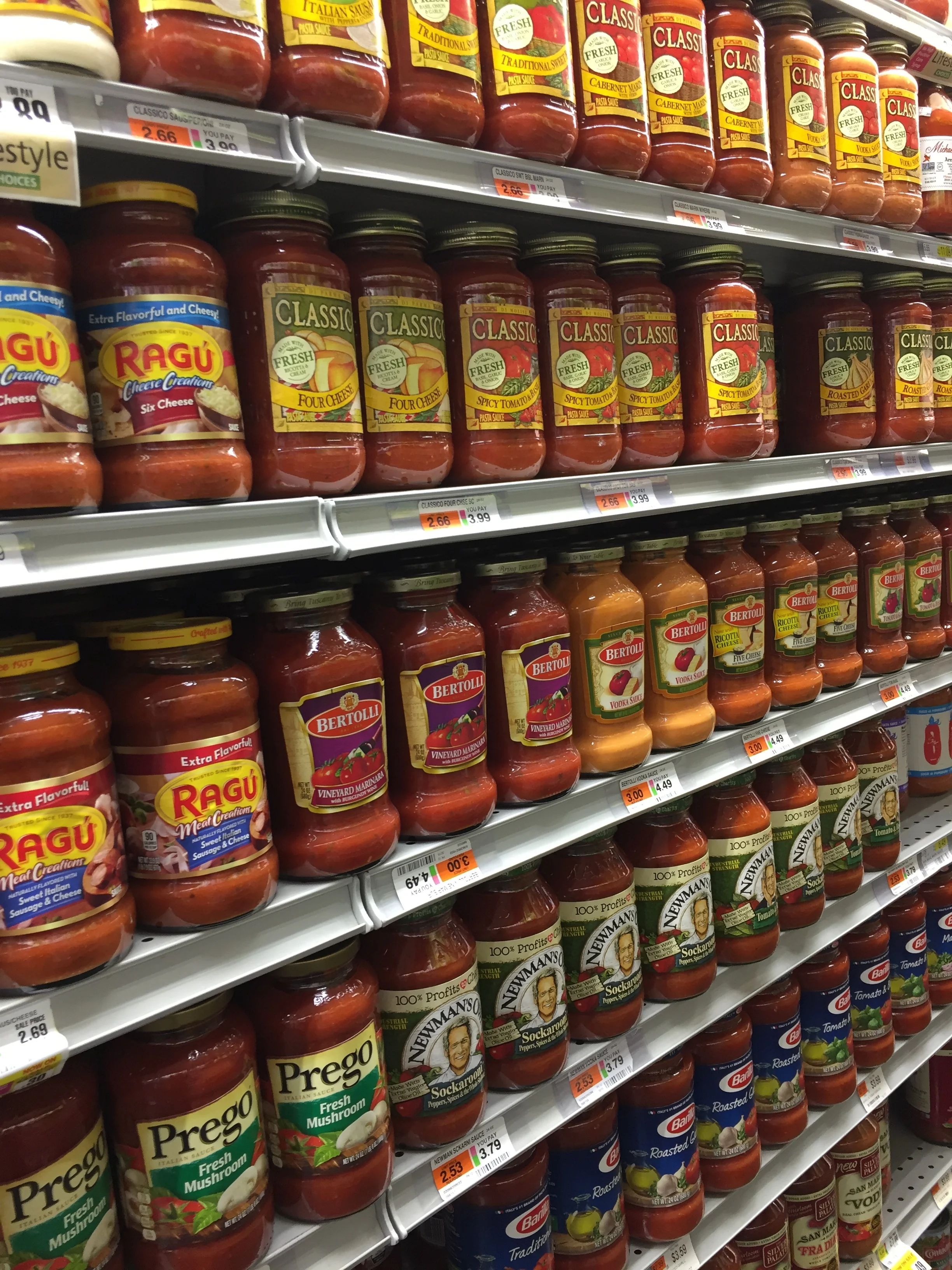
As a child, whenever we took a skiing trip (we would stay in a condo with an adequate kitchen) and my dad would “cook” dinner which amounted to Mrs. Paul’s fish sticks and spaghetti with Ragu tomato sauce. My brother and I remember this well but I don’t think we would chose to have this meal now because really our tastes have changed and I like to think that I am a more evolved home cook!
Now, I don’t know about you but I don’t have the time to stand on my feet for hours and make homemade tomato sauce (like grandma use to do in the commercials).  But if you do have this time, by all means I would like to order a jar from you! So, in these busy times I think it’s ok to “enhance” your “homemade” pasta sauce by starting with an ordinary jar that you find on the supermarket shelf.

And here are some easy hacks to take.
Heat your sauce- I always put my sauce on the stove to lightly simmer before tossing with the pasta.
Add veggies- I will usually sautee with garlic and olive oil some squash, carrots or mushrooms and add to  the sauce. I also love throwing in some black olives and maybe some capers and spinach to the sauce. By adding these fresh veggies, my sauce becomes more flavorful and authentic.     
Add sugar- Sometimes the sauce tastes too acidic and so I add a teaspoon of sugar to the sauce.
Add dairy- This is a straightforward way to achieve a creamy sauce. As the tomato sauce warms, stir in about ½ cup of heavy cream, half-and-half, or whole milk. The color will evolve to a rosy tone. Soft cheese and grated cheeses are always  a good idea too!
Fresh herbs-  Finish the sauce with a handful of freshly chopped herbs, such as basil, parsley, oregano, cilantro, chives or thyme.


So you can see, it doesn’t have to be elaborate or overly complicated to make a store bought item taste like it was made at home! Just use your imagination and you can’t go wrong!


Breakfast for Life

Fotolia_173333123_XS.jpg

When I was little I never ate breakfast. Who had time to waste when I wanted to get to school to hang out with my friends before classes started. My parents use to tell me that breakfast was the most important meal of the day. I felt fine throughout the day and so I kept my routine of skipping breakfast.


And then something happened. I changed. I went to college and muffins were the thing. Remember the early 90’’s when bran muffins were healthy? Well, we all ran to the local health food cafe (yes, my Badgers, Sunprint had the best muffins!) and I couldn’t think of life without breakfast! And so I started to eat breakfast and as I got wiser and food trends changed so did what I ate. The muffins disappeared and oat bran cereal took its place alongside the breakfast table. I was hooked- eating breakfast changed my life. It wasn’t the coffee that I needed to wake up- it was the food. Eating breakfast fueled me and gave me energy to start the day off right.


Here are some reasons to start your day with eating breakfast:

  1. You are likely to consume less fat throughout the day
  2. You are likely to eat fruits and veggies in the morning
  3. You are likely to have a higher daily calcium intake
  4. You are likely to have a higher daily fiber intake
  5. You are likely to have better performance (memory and attention) throughout the day

If you start with a healthy, satisfying meal in the morning you're less apt to nibble on less nutritious things during the day, which we often do out of hunger.


Ok, so my college days of muffins were more a result of food trends in the 90’s. And actually as I look back on my freshman 15, it wasn’t too healthy. So, being mindful about what you choose to start your day is important!

Here are some suggestions for those on the go:

  1. High-fiber cereal with fresh fruit and low-fat milk or soy or almond or coconut milk
  2. Low-fat protein shake with fresh/frozen fruit
  3. High-fiber toast with tablespoon of peanut butter
  4. Eggs or egg whites with fresh veggies and fruit

For more suggestions on how to start your day email me at rachel@livehealthynyc.com


Pumpkins

IMG_3271.jpg

I love to go pumpkin picking in the early fall! The best part is picking the right ones that we can carve into halloween jack-o-lanterns and then use the seeds and flesh to roast. Pumpkins are super nutritious as they are loaded with antioxidants and disease-fighting vitamins.
Here are some interesting pumpkin facts:
Pumpkin is loaded with beta-carotene which is a provitamin that is converted to vitamin A in the body. Known for its immune-boosting powers, beta-carotene is essential for eye health and has also been linked to preventing coronary heart disease.
You don’t have to use fresh pumpkin to reap the benefits. I use canned pumpkin (less work!) which is equally as good!  
The seeds are packed with protein, magnesium, potassium, and zinc. Studies suggest pumpkin seeds provide a number of health benefits— such as blocking the enlargement of the prostate gland, lowering the risk of bladder stones, and helping to prevent depression.
But, be careful. You don’t want to overdo a good thing. Eating too much beta-carotene isn’t toxic, but excessive consumption can cause a yellowish discoloration of the skin called carotenemia. Don’t worry, though—turning into a pumpkin after midnight is still only for the fairy tales—the skin discoloration is harmless and can be easily reversed.
There are so many ways to incorporate pumpkin and the seeds into your meal that doesn't just involve the traditional pie. I love to add it to my morning oatmeal for a different flavor or in greek yogurt. I found a great easy recipe for pumpkin muffins so click here
 to make it for yourself! Happy Autumn!  


Aging Better Now

Fotolia_119604917_XS.jpg

We can not turn back the clock when it comes to aging but we can take (healthy) steps towards helping us feel the best we can. Both men and women can relate to this feature as the only way to optimal well being is by taking care of ourselves through a healthy diet and exercise and lifestyle plan.
Here are some ways that you can feel better about yourself and change the way you look. And it’s not as difficult as you may think.

  1. Rethink the connection between diet and exercise. You can’t get away with thinking that you can eat all you want and go to the gym and just burn it off. Hate to be the voice of reality but your body is not the same as it once was when you were in your 30’s. While exercise is essential, it’s not going to undo the one drink that turned into 3 the other nite or the double cheeseburger or chicken parm and pasta. You need to drink and healthy as well as exercise to keep your body fit.
  2. Exercise by weight training. Many think the longer we stay on the bike or treadmill then the more calories we burn and the better we will look. Not necessarily true. Naturally as we age we lose muscle mass. Yes, cardio is great for your heart, increasing lung capacity and decreasing stress, but that doesn’t mean you should do it exclusively, ignoring the weight-loss benefits of strength training. Working out with weights a couple of times per week is enough to reverse the loss of muscle mass. And, believe it or not, strength training has also been shown to lower stress levels, while also improving cognitive abilities, protecting against bone loss, and reducing risks for Type 2 diabetes, cancer, high blood pressure, and heart disease.
  3. Increase your fiber. This is essential for good health. And it is easy to do. Just eat plenty of fruits and vegetables, beans, nuts and whole grains. Foods with high fiber are more filling and keep you from noshing later on.
  4. Eat the right type of protein. Not all proteins are created equal. So, stick to lean sources like lean turkey, chicken, salmon, and plants.
  5. Rest. This is so important and often overlooked as we have so much to do in a given day. But, in order to do it all we need to be rested. We need sleep to refuel our minds and bodies so that we can be as productive and energized as we want to be and as we can be. Taking naps is not underrated! And neither is getting to bed at a reasonable time. Getting enough rest will help to keep your metabolism working effectively and help to keep the unwanted weight off.

Follow these tips and you will feel great and look even better than you did many years ago! Be your best self now! NUTRITION. WELLNESS. BALANCE.


All Salads Are Not Created Equal

IMG_3247.JPG

If you truly know me you know that I am a salad person. I can eat salads all day long. I truly love vegetables and I love the process of creating what I believe to be the perfect salad. I realize that not everyone enjoys a salad quite the way I do but I also think that it is because there is an art to making the perfect salad. So, here are some of my “salad pointers” to try for yourself or when you go to a salad bar.
Picking the salad dressing is always the final step but I feel it is one of the most important parts of a salad so this is my first point. It can either make or break the nutritional content of a good or bad salad. I advise to keep the dressing to olive oil and balsamic vinegar (and not too much of it) and maybe you can add a bit of dijon mustard and even a teaspoon of Parmesan cheese. Who wants to get a salad where it is drowned in dressing, croutons, or other unhealthy toppings. Stay away from toppings that are fried or sauteed (they are often drenched in both olive oil and butter). When preparing your own salad, you can add raw veggies or roasted. You can add beans and grains and also a bit of chopped nuts and or seeds as well add fresh fruit or dried fruit. Don’t forget about adding your lean protein. Eat grilled or steamed or boiled. You can forget ordering the breaded chicken cutlet! Also, when possible, eat a salad that reflects the season. And make sure your salad has color! It makes it more interesting when the salad has a rainbow of fresh colorful veggies. Sometimes, it’s not uncommon to feel overwhelmed by the choices of toppings at the salad bar. I try to keep it simple. Stick to 5 toppings. In this case, less is more! But, always make sure to include protein (chicken, fish or vegetarian protein like tofu or tempeh), carb (beans, grains, fruit) and healthy fat (avocado, nuts).
If you click here you can find a great easy fall salad to prepare (I used leftover steak from dinner the night before that I heated up and roasted squash that I placed over a bed of spinach). Not big on making your own? That’s ok. Click here to find locations for your nearest Sweetgreens, Chopped and Just Salads healthiest salad stops. For more ideas, feel free to contact me at rachel@livehealtynyc.com


The Case for Peanut Butter

Fotolia_150561236_XS.jpg

I love my peanut butter. I am sorry for those with a peanut allergy. Truly I am. Peanut allergies are severe and everyone should be aware they exist. But, for those of you who can eat peanuts, this one is for you. Research has found that a diet that includes foods with high levels of monounsaturated fats like peanut butter can help people lose weight and prevent heart disease. It is fats found in foods such as olives, nuts, avocados and peanut butter that are good for you. So, the take-away is that peanut butter is a healthy food, packed with protein, fiber and monounsaturated fats, plus plenty of fat-burning folate. However, be aware, most commercial peanut butters are packed with sugar and fillers, and have more sugar than they do fiber. This is not a healthy way to eat. So, look for brands that are made with just peanuts (and maybe just a bit of salt). The best pb that I have found is : Smuckers Natural PB Creamy and also the Crunchy one too! This brand is easy to find in many local supermarkets so it very accessible. What’s the best way to eat pb? Well, not out of the jar! That’s dangerous! Best to take a small smear (it goes along way) and have it on your favorite grain bread (love it toasted) or with an apple! I also love to add it to a smoothie (but be careful you don’t add too much) or as my daughter loves for breakfast when she blends it into oatmeal with a side of sliced banana. Want more ideas how to enjoy this creamy good for you food? Feel free to email me at rachel@livehealthynyc.com.


How to Stop Eating Sugar

Fotolia_88507395_XS.jpg

I have never been a sugar addict (my addictions are more in the name of cowboy boots and jeans). But I know a lot of people who are sugar fiends. It’s not exactly breaking news or shocking that sugar is bad for you. It damages your teeth, it destroys your skin (leads to breakouts and wrinkles) and it can lead to health problems.
The good news is there are ways to cut sugar out of your diet once and for all. There are foods that we can replace for sugary drinks and foods- I call them food swaps and they offer healthy benefits.
    •    Binge on berries- Blueberries and raspberries contain little sugar and offer antioxidant benefits.
    •    Dairy- Choosing plain yogurt instead of ice cream, for example, gives you the benefit of probiotics, which help maintain proper digestive health. In fact, imbalanced gut bacteria and candida overgrowth have been linked to more intense sugar cravings, and probiotics can help rebalance the gut bacteria. Enjoy your yogurt with some fresh berries and low-sugar granola for a satisfying fiber- and protein-rich snack that will keep your blood sugar from spiking.
    •    Eat real food- A diet rich in vegetables, fruits, beans, nuts, whole grains, eggs, poultry and wild fish are not high in sugar. It’s what you put on them that causes trouble. Simply put, fresh food tastes fine!
    •    Smart swaps- curbing your sweet tooth just takes some thought. Instead of sugar candy gummies, have a fresh mango. Grilled fruit brings out the natural sugar that you are seeking. Mashed sweet potatoes are also a great source of sweetness without the sugar.
The more you eat real unprocessed foods the less you will crave sugar. Trust me, you will feel better without artificial sugar and by eating real food.


Connecting to Yourself

Fotolia_165779962_XS.jpg

Feeling good is a lot like the game I use to play with my kids- connecting the dots. I remember I would sit at a diner, draw dots on a napkin and have my kids connect the dots (it kept them quiet and busy as we waited patiently for our meal). Feeling our best is being able to realize that we need to connect our body and our mind and our soul all together. That is the balance of good health. So how do we get there? It’s a journey. And it takes work but if you want to feel great it’s not hard because you have determination. You start with setting your intention and making good healthy habits that are part of your life. It’s important to recognize how truly powerful you are. You are capable and able to change your life towards a healthier you. The support of professionals andfriends and family are instrumental. We all need positive reinforcement to get us through the hard stuff and what leads us to temptation.
One therapy (among many) that I have found to be helpful in connecting my thoughts and feelings and recognizing how my body feels is massage therapy. It has always seemed like a luxury to have a massage. But I am not talking about a simple back rub. It’s more about feeling your body, your muscles and tissues and what connects you physically to the emotional you. Massage therapy can be a powerful tool to help you take charge of your health and well-being. It complements other therapies. Try it for yourself. It’s all about the journey to finding and making yourself the best you there is!


New Beginnings

Fotolia_96458959_XS.jpg

Every Sunday I set aside a few minutes to think about the week ahead and what I have planned and what I hope to achieve in the coming week. I create a mental list of “to-do’s”. Sometimes I am very concrete (supermarket shopping, dry cleaning, pick up pharmacy orders, remember to call the exterminator) and other moments I am deep in thought as to how I hope to be a better mom, wife, friend, daughter and clinician. This Sunday brought me to thinking about Rosh Hashanah, the Jewish New Year. I started to reflect on the past year. Wow, what a year it’s been! For me and my family the biggest part of this past year has been the college process. Our son studied, applied and was accepted to The University of Michigan. And off he went. This new beginning is exciting and filled with lots of emotions as the next chapter of our family life begins. We will visit and he will come back- that I am sure of. While we are not perfect (what family is?), we are bonded by traditions that are filled with love. So, it’s only natural for me to associate the this time with the beginning of this new year. As a therapist and a nutritionist  I think about the foods that we eat on this holiday. In particular apples and honey. The apples that I buy are both a bit sweet and tart. And the honey is always sweet. A metaphor of life. This combination is just right. It’s all about a balance. Many of my clients are a bit afraid of the holidays and this one is no different. The foods are rich and the wine is plentiful. I work with them to help them eat in moderation and to enjoy their company that they are sharing the meals with. In my mind, and what I try to practice and teach is that while the foods are good and should be enjoyed, it is the company with whom we share the holiday meal with that is far more significant than what is put on our plate. All of this being said, if you click on here you will find a delicious apple recipe that is easy to prepare and healthy!
Wishing you and yours a happy healthy sweet year!


How to de-Bloat

Fotolia_132366174_XS.jpg

I hate the feeling of bloat. Honestly, who likes to feel gassy, puffy and plain ol miserable? Abdominal bloating (sometimes described as feeling too full) affects us all at some point in time. You can blame it on your period, on overeating, being constipated, or dining on gas-producing foods.
But, there are some foods that can help you de-bloat.
    1.    Kiwi-This little green fruit contains enzymes that help break down protein, so it moves more easily through your system. In one recent, very small study, participants who had several meals of steak and kiwi had significantly less bloating than those who had the steak meals with no kiwi.
    2.    Banana- Women who ate a banana a day reported less bloating than those who only had a banana-flavored drink or plain water. That's not surprising: Bananas are high in potassium, which helps balance sodium and prevent the water retention that can come from eating salty foods. And a banana's fiber can help ease constipation, and the more you poop, the less you puff up. Plus, bananas (especially greener ones) are high in resistant starch, a kind of carb that helps maintain healthy gut bacteria.
    3.    Papaya- A few fresh slices after a big meal may help ward off a bloated belly. That's because papayas have papain, another enzyme that breaks down protein in your digestive tract. The tropical fruit also fights inflammation, just what a bulging belly needs.
    4.    Ginger- You probably already know ginger is a great natural remedy for motion sickness, nausea and many other ailments. Turns out this natural stomach soother can help bloating, too. Studies show it reduces swelling and stimulates the digestive muscles, making it easier for food to pass through. Try it brewed in hot tea, or add a little grated fresh ginger to a smoothie.
    5.    Peppermint- This popular herb can increase the liver's bile production, helping your body digest fatty foods so they can move through the stomach more quickly. A soothing cup of peppermint tea can also relax your digestive muscles, allowing trapped gas to pass.
    6.    Yogurt- Yogurt's probiotics (good bacteria) help your gut digest and absorb food, so there's less gas and bloating. Go for plain yogurt with active cultures, and sweeten it with a little fruit.
    7.    Water-You may think water will make you more bloated, but drink up. You'll be getting the hydration your body needs to digest food, flush out excess sodium—and, if you're constipated, help you go.
Luckily bloating is harmless and by eating the right foods and drinking plenty of water you will feel good!


Gluten-Free

Have you noticed how many products are labeled “gluten-free”? It’s overwhelming. Is everyone out there allergic to gluten? Does going “gluten-free” really matter? For whatever reason, we have heard that gluten is bad for you and that in order to be healthy we need to stay away from bread, pasta and grains. Truthfully, there are some people who are allergic to gluten and they are diagnosed with celiac disease and gluten is off limits. There are also some people who have a sensitivity to gluten so they are careful about what they eat. I believe that you have to know your body and listen to the signs that your body tells you. I also believe that you should eat whole foods- not ones that come in a bag. Is eating a bag of gluten-free chips or gluten-free chocolate chip cookies really good for you? Probably not.
If you are allergic to gluten or have a sensitivity to it, here is a short list of food that In addition to pure wheat, all of its forms are off-limits: wheat starch, wheat bran, wheat germ, couscous, cracked wheat, durum,farina, faro,kamut, matzo, semolina, spelt.
Other offenders are: barley, bulgur, oats (oats themselves don’t contain gluten, but are often processed in facilities that produce gluten-containing grains and may be contaminated), rye, seitan.
As well, gluten may also show up as an ingredient in: barley malt, chicken broth, malt, vinegar, some salad dressings, veggie burgers (if not specified gluten-free), soy sauce, seasonings and spice mixes, soba noodles, and condiments.
So, what can you eat? The list of off-limit items may seem daunting at first. Thankfully, there are plenty of replacements on the menu. Lots of foods are naturally gluten-free, including: fruits and vegetables, beans, seeds, legumes, nuts, potatoes, eggs, dairy products, oils and vinegars, corn, rice, fish, lean beef, chicken and seafood.
I know that this may seem overwhelming, but really it isn’t. It helps to keep a food diary and you will learn to understand your body and what foods work best for you. This will help pave your road to a healthy lifestyle that is as manageable as getting out of bed and brushing your teeth. The take home message- eat whole foods and practice eating healthy on a daily basis- it’s the only real way for a healthy life.


Healthy Snacks

Hungry mid morning or later in the day? We all get a flash of hunger at some point during the day, and it can often be when we least expect it. But, whatever you do, don’t reach for the snickers bar or a bag of chips. Be mindful and grab a high protein, low calorie, healthy snack.
Here are some easy accessible options:
Hard-Boiled Eggs: A 78 calorie egg brings in over six grams of protein, and it's one of the easiest snacks to prep. Just boil, chill, store in the fridge, and snack on the go.
Trail Mix: Lean on a hearty balance of nuts, seeds, and dried fruit when you need a healthy snack on the road. Trail mix varies based on ingredients, but you can make your own healthy trail mix with high-protein, low-calorie ingredients to keep you full without overdoing it on calories.
Edamame: Soybeans aren't just an appetizer for a sushi dinner! A great plant based snack with a lot of protein they're only 150 calories per half cup and taste delicious.
Turkey and Cheese: Have a high fiber bran cracker and top with lean turkey, low fat cheese and you can power through the rest of your day. Get creative and add some sliced cucumber or avocado.
Greek Yogurt: Have a small cup and add some berries and a few sliced nuts and seeds. If you have time you can use your blender and make a fast delicious smoothie.
These snacks will keep you healthy and in shape! I love these options and hope you do to!


Basil

One of my favorite hobbies in the summer time is our vegetable garden. In the beginning of the season my husband plants all of the vegetables and then we both water and tend to it and hope the deer and rabbits stay far away!
This year the basil plant has taken a life of it’s own! We have a few varieties and it is one of my favorite herbs. Basil is considered one of the healthiest herbs. When fresh I find that it exudes a sweet, earthy aroma.
While I love making pesto (click here for a great easy recipe), basil comes with an impressive list of medicinal properties and vitamins and nutrients rather than just its culinary value, that extend the herb’s uses far beyond the humble pesto. Like other aromatic plants, basil contains essential oils and phytochemicals in the leaves, stem, flowers, roots and seeds that have biological activity in the body.
Throughout history, ancient cultures have used herbal remedies to prevent and treat illness and disease. Basil is just one example of the wide range of medicinal flora historically used in plant-based tinctures, compresses, syrups and ointments. It has been used for centuries in Ayurveda, a traditional Indian system of medicine, as a treatment for gastric, respiratory and inflammatory disorders as well as a remedy for headache, fever, anxiety, convulsions, nausea and hypertension. Basil provides vitamin K, essential for blood clotting and vitamin A, which contains beta-carotenes. Other vitamins and minerals in basil include iron, calcium, manganese, magnesium, vitamin C and potassium.
Who knew that all of these wonderful properties existed in such a small leafy plant!


The Best Healthy Banana Bread

EASY HEALTHY BANANA BREAD

IMG_2945.jpg

2 bananas (well mashed)
1 cup brown sugar
2 eggs (beaten)
½ cup vegetable oil
2 cups flour (1 cup should be whole wheat flour)
1 tsp baking soda
½ tsp salt

Preheat oven to 350 degrees. Mash bananas in a mixing bowl. Add sugar, eggs, oil mixing well each time. Sift dry ingredients together and add to banana mixture. Pour in a lightly greased 5x9 loaf pan and bake 55-60 minutes. You can add mix-ins like dark chocolate chips, dried fruit and chopped nuts if you want.


What is Ghee?

My friend who is a trained chef switched to using ghee butter. He insisted I start to use it when I cook. He promised that by eating ghee not only was it healthier for us but no one in my family would notice the change in taste when I made the switch.
What is ghee anyway? Ghee is an ancient health food and not at all a fad. Ghee is clarified butter. It is simmered longer to bring out butter’s inherent nutty flavor. The process of making ghee removes the water and milk fats, leaving a high-smoke point (meaning that it can be heated to a pretty high temperature before it starts to smoke) fat. It is nutritionally rich like coconut oil. Ghee has a unique nutritional profile without any lactose or casein. So, people who are lactose or casein-sensitive can use ghee because the process has removed these allergens. Ghee is great to cook with- it has a high smoke point which means when you cook you are not in great danger of causing a kitchen fire (unless you completely turn you back to what you are doing). Ghee is rich in vitamins. In particular, it is rich in vitamins A, D and E. Ghee is made from grass fed cows! Ghee also plays a role in reducing inflammation in the digestive tract and throughout the body. In Ayurvedic practice, ghee benefits the body by creating a more alkaline system that overall reduces inflammation. It’s believed that inflammation is at the root of most diseases we face today including Alzheimer’s Disease, some types of cancer, high cholesterol levels, arthritis and asthma. I like the taste of ghee and hardly notice a difference. But, let me warn you. It’s not low calorie. It’s just a bit better for you! I hope you will try ghee in your next recipe at your next meal.  Let me know what you think!