Healthy Doesn't Always Look Healthy
The other day, I got on a horse for the first time in years. He was tall, gentle, and, as I soon learned, carrying a little extra weight around his middle. Before I climbed into the saddle, the rancher casually mentioned that he was on a special diet. His hay had to be soaked in water to remove some of the sugars because he was prone to metabolic issues.
I couldn't help but laugh. My first thought was, Even the horses are on diets now?
But as he explained, I realized this had nothing to do with the horse's appearance. It wasn't about making him thinner. It was about keeping him healthy. His diet was tailored to his unique health needs, not to how he looked.
That conversation stuck with me because it reminded me how often we confuse health with appearance. We assume we can look at someone and know whether they're healthy. We praise people for looking "fit" without knowing what's happening beneath the surface, and we judge others who don't fit society's image of health.
The truth is, healthy doesn't always look healthy. And looking healthy doesn't always mean you are.
Somewhere along the way, we've confused the appearance of health with health itself. We assume that if someone is thin, exercises every day, drinks green juice, and orders the salad, they must be healthy. On the flip side, we often assume that someone in a larger body or someone who enjoys dessert couldn't possibly be taking care of themselves.
As both a therapist and an intuitive eating counselor, I've learned that what we see on the outside rarely tells the whole story. I've worked with people who looked like the picture of health while privately struggling with food anxiety, compulsive exercise, chronic stress, poor sleep, or an exhausting need to control every bite they ate. Their bodies may have appeared healthy, but their relationship with themselves was anything but.
I've also met people who don't fit society's narrow definition of health who nourish themselves well, move their bodies with joy, prioritize rest, cultivate meaningful relationships, and live with far more peace.
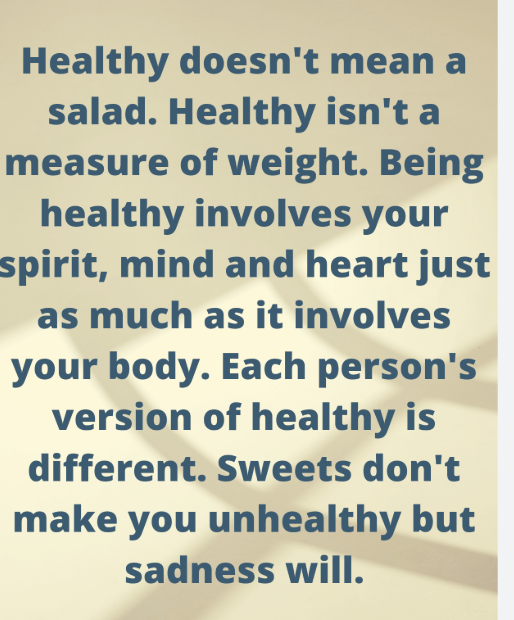
Health isn't a look. It's a way of living. Yes, nutritious food matters. Our bodies thrive on foods that provide energy and nourishment. But nutrition is only one piece of the puzzle. Health also includes quality sleep, managing stress, joyful movement, meaningful relationships, laughter, purpose, and giving ourselves permission to rest. Sometimes the healthiest choice isn't ordering the salad. Sometimes it's saying yes to dinner with friends, taking a day off from the gym, or eating birthday cake because celebrating someone you love nourishes you in ways no nutrient chart can measure.
The healthiest people I know aren't the ones who never eat dessert or never miss a workout. They're the ones who have built balanced lives. They care for their bodies, but they also care for their minds, their relationships, and their spirits.
True health isn't something you wear. It's something you live.